Appearance
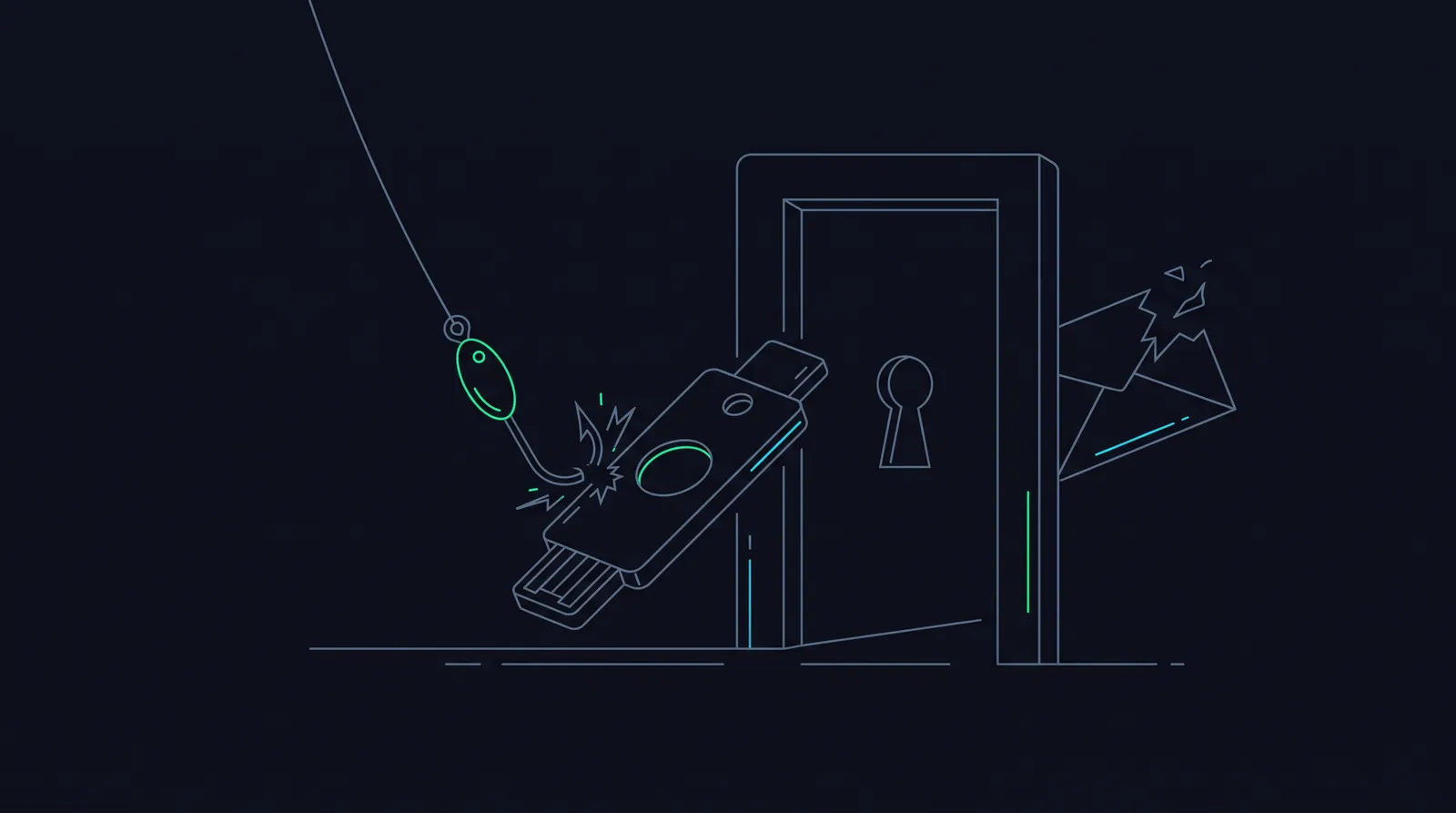
Engineering — Reference Implementation
Zero-Trust Phishing-Resistant Identity Architecture
Purpose: Executive-level blueprint — eliminates shared secrets, enforces continuous cryptographic verification at the API gateway, and satisfies eIDAS/NIS2/GDPR under European regulatory constraints.
Version: 1.0.0 | Last Updated: 2026-06-28 Dependencies: None (executive overview — no code imports)
1. Phishing-Resistant Authentication (FIDO2 & WebAuthn)
True phishing resistance requires binding authentication cryptographic keys directly to the specific browser origin (domain). This prevents users from accidentally typing credentials into spoofed websites. [1, 2, 3, 4]
text
[User Browser] --(WebAuthn Navigator API)--> [FIDO2 Authenticator (TPM/YubiKey)]
      |                                              |
      |-- Asserts: origin: "https://secure.app" -----|
      v
[Reverse Proxy / OAuth2 AS] <--- Verifies Public Key & Challenge- Implement WebAuthn: Deploy FIDO2/WebAuthn as the primary authentication mechanism. Use platform authenticators (Apple TouchID, Windows Hello, Android Biometrics) for daily convenience, and roaming authenticators (hardware YubiKeys) as corporate backups. [5, 6, 7, 8, 9]
- Enforce Origin Binding: Ensure the relying party server strictly validates the
clientDataJSON.originparameter returned by the WebAuthn API. If a user is onhttps://secure-login-phish.com, the hardware key generates a signature bound to that domain, which automatically fails validation on the legitimate server (https://secure.app). - Disable Legacy Fallbacks: Remove passwords, security questions, and SMS/TOTP codes from authentication flows. Phishing resistance is only as strong as the weakest fallback method. [10]
2. High-Assurance Identity Proofing (eIDAS & Smart-ID)
For regulatory onboarding and high-risk actions, integrate European electronic identity (eID) frameworks to tie a physical identity to a digital account.
- Utilize eIDAS Levels of Assurance (LoA): Map user actions to eIDAS assurance levels. Use LoA Substantial or LoA High for administrative changes, high-value financial transfers, or cryptographic signing. [11, 12]
- Integrate Smart-ID and Mobile-ID: Leverage existing Baltic/European infrastructure like Smart-ID or Mobile-ID as the identity verification bootstrap. When a user creates an account, use these services to ingest cryptographically signed, verified identity data (national identification numbers and full legal names). [13]
- Account Recovery Anchoring: Use an eIDAS-compliant identity check as the sole automated mechanism for account recovery. If a user loses their FIDO2 passkey, they must re-authenticate via Smart-ID or an official eID card to bind a new WebAuthn credential, eliminating social engineering risks in customer support.
3. Zero-Trust Architecture (ZTA) Implementation
Zero-Trust dictates that implicit trust based on network location (corporate VPN) is entirely eliminated. Every request must be explicitly authenticated and authorized. [14, 15, 16, 17, 18]
Context-Aware Access Policies evaluate signals beyond the cryptographic credential before granting access to a resource:
- Device Health: Is the OS updated? Is corporate MDM active?
- Network Context: Is the request coming from an impossible travel velocity?
- Risk Scoring: Is the user behavior typical?
Short-Lived Access Tokens: Issue cryptographically signed JSON Web Tokens (JWTs) with an expiration (exp) time limited to 5 to 15 minutes. Enforce the use of asymmetric signing algorithms (RS256 or ES256). [19]
Continuous Adaptive Authentication: Implement an API gateway or reverse proxy that monitors session state. If a user's IP address changes drastically mid-session, instantly step-up authentication by prompting a new WebAuthn biometric challenge before fulfilling the API request. [20]
4. Regulatory Compliance & Data Sovereignty
The authentication design must satisfy the strict audit, security, and privacy mandates of European law. [21]
GDPR (General Data Protection Regulation)
- Biometric Decentralization: WebAuthn inherently complies with GDPR data minimization principles. Raw biometric data (fingerprint template or facial map) never leaves the user's device hardware enclave (TPM/Secure Enclave). The server only stores a public key and a counter. [22, 23, 24]
- Data Minimization: Do not store unnecessary personally identifiable information (PII) in the identity provider database. Use a unique, opaque user ID (
subclaim) inside tokens instead of emails or names where possible.
NIS2 (Network and Information Systems Directive)
- Mandatory MFA: NIS2 categorizes multi-factor authentication as a baseline security requirement for essential and important entities. The FIDO2/WebAuthn design natively fulfills this by requiring two factors in one gesture: possession (the physical device) and inherence (biometric scan) or knowledge (device PIN). [25, 26, 27, 28, 29]
- Supply Chain Auditing: Document and continuously monitor identity providers (IdPs), token validation libraries, and open-source dependencies. Log all authentication anomalies to centralized, tamper-proof audit trails for incident response reporting compliance.
Component Comparison
| Component [30, 31, 32, 33, 34] | Primary Security Value | Regulatory Alignment | Phishing Resistance |
|---|---|---|---|
| WebAuthn / FIDO2 | Eliminates shared secrets; cryptographic domain binding. | NIS2 (MFA Mandate) | Absolute |
| Smart-ID / eIDAS | Government-backed identity verification. | GDPR (Accuracy), eIDAS Regulation | High (App-PIN based) |
| Contextual ZTA | Eliminates network-based trust. | NIS2 (Risk Management) | N/A (Session Layer) |
Design Decisions to Refine
- What identity provider (IdP) platform or tech stack is planned (Keycloak, Okta, custom OAuth2 server)?
- Is this designed primarily for internal corporate employees or external public consumers?
- Is assistance needed drafting specific WebAuthn registration and authentication API payloads?
References
[1] https://medium.com/@kmuitspice/fido2-only-for-admins-sounds-great-until-you-try-it-smb-it-spice-822e00aca3bc [2] https://www.kryptocybersecurity.com/the-unphishable-lie-bypass-attacks-persist/ [3] https://auth0.com/blog/webauthn-a-short-introduction/ [4] https://www.oloid.com/blog/strong-authentication [5] https://learning.okta.com/configure-fido2-authenticators [6] https://www.deloitte.com/us/en/services/consulting/articles/fast-identity-online-passwordless-authentication.html [7] https://goteleport.com/docs/zero-trust-access/management/security/idp-compromise/ [8] https://www.authelia.com/roadmap/complete/webauthn/ [9] https://blog.lastpass.com/posts/fido-2-compliance [10] https://traitware.com/phishing-resistant-mfa [11] https://www.mdpi.com/2078-2489/16/5/385 [12] https://org.frejaeid.com/en/eidas-explained/ [13] https://ec.europa.eu/digital-building-blocks/sites/display/TDD/2.1+-+Identity+and+Record+Matching+-+Q4+2022 [14] https://medium.com/@tahirbalarabe2/implementing-zero-trust-architecture-using-software-defined-perimeter-sdp-dfe8ecd74381 [15] https://www.redfoxsec.com/blog/zero-trust-security-what-it-means-and-how-to-implement-it-in-2026 [16] https://www.csoonline.com/article/564201/what-is-zero-trust-a-model-for-more-effective-security.html [17] https://www.apisec.ai/blog/zero-trust-api-security-upgrade-your-cyber-defense-today [18] https://platformengineering.com/best-practices/security-at-scale-embedding-zero-trust-in-platform-design/ [19] https://medium.com/@loredan/authentication-unlocked-a-beginners-journey-through-oauth-2-0-5a4f10938a56 [20] https://www.cygnet.one/feeds/blog/zero-trust-iam-solutions [21] https://securew2.com/blog/what-is-a-non-human-identity-a-guide-to-nhi-security [22] https://www.loginradius.com/blog/identity/how-phishing-resistant-authentication-works [23] https://shahbhat.medium.com/implementing-fido-and-webauthn-based-multi-factor-authentication-2c86b09ba8a0 [24] https://hideez.com/blogs/news/passwordless-authentication [25] https://www.onespan.com/blog/NIS2-part2-strong-authentication-requirements-for-employees-in-EU [26] https://www.venn.com/learn/zero-trust/zero-trust-architecture/ [27] https://bitwarden.com/resources/nis2-checklist/ [28] https://www.loginradius.com/blog/identity/passwordless-authentication-and-mfa [29] https://www.jotform.com/psd2-regulation/ [30] https://www.avatier.com/blog/hidden-challenges-otp-authentication/ [31] https://terrazone.io/phishing-resistant-mfa-fido2-webauthn/ [32] https://www.oloid.com/blog/fido-2-webauthn [33] https://kieransky.co.uk/docs/ [34] https://bitwarden.com/resources/nis2-checklist/